Raul

Raul’s Blog

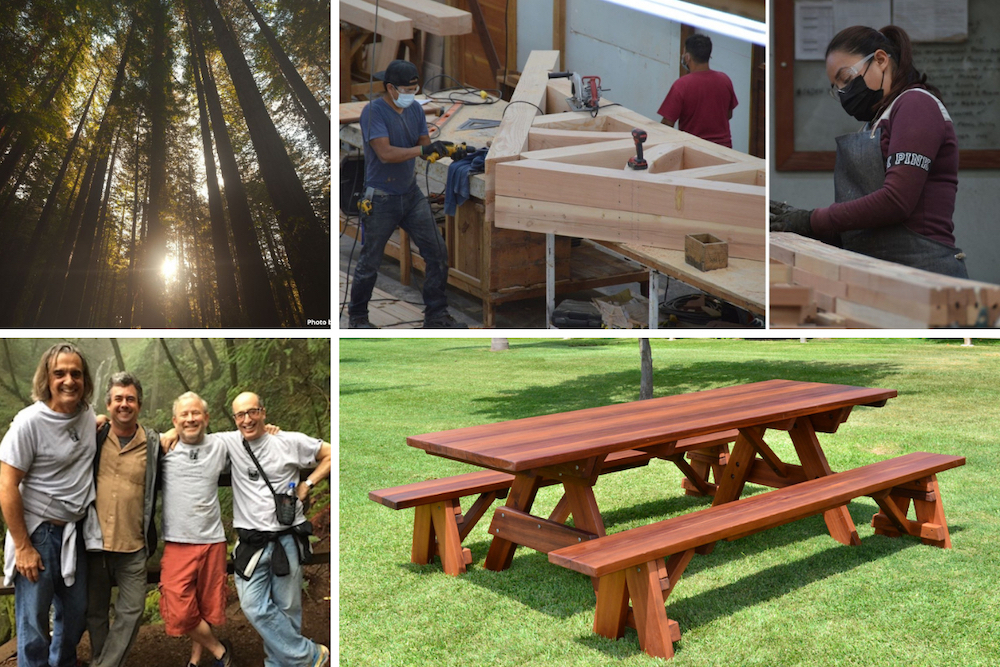
Raul D. Hernandez is the founder and CEO of Forever Redwood. An expert on restoration forestry, he writes about the practical dimensions of ecoforestry, based on his hands-on experience restoring ancient forestland in Northern California since 1995. He also answers customer questions about Forever Redwood furniture, the sale of which helps fund the restoration work.

Archive for the ‘Commentary’ Category

The Truth About Sustainable Forestry

Thursday, April 8th, 2010

“Sustainable Forestry” is primarily green marketing. It’s unfortunate, it’s sad, but in my humble (and experienced) opinion, it’s truly the case.

In September, 2009, the New York Times ran an interesting article: Environmental Groups Spar Over Certifications of Wood and Paper Products that shows how and why this is true.

I have been involved in hands-on forestry work for nearly two decades. I personally know the forester that wrote the original Smartwood certification standards nearly 20 years ago (Mr. Fred Euphrat of Healdsburg, CA). Smartwood is run by the Rainforest Alliance and is the most ecologically vigorous arm of FSC (Forest Stewardship Council).

The original Smartwood standards created by the Institute for Sustainable Forestry in Redway, CA have been expanded and broken down into many new certification standards. You can visit the Rainforest Alliance site at www.rainforest-alliance.org to learn more.

It’s a great website and these guys sound green to the core. I am sure they are well intentioned and are committed to the cause. They have the paperwork, the website, the contracts and the legal and political muscle in place. But, the bottom line is in order to have grown to over 100 million acres under certification, even the best of these standards has in practice been watered down over the years to allow for larger and larger industrial concerns to sign on.

FSC (Forest Stewardship Council) has the best reputation in the industry and deservedly so. They have moved industrial forestry in the right direction a couple steps. But, it’s not enough. Nowhere near enough to reverse the degradation still going on all over the world or even to restore the lands under certification.

For example, to be certified “sustainable” by FSC does not mean forestlands have to be restored to large trees or that the great losses in biodiversity and wildlife habitat are being significantly restored. To the contrary, most certified forests only have to be maintained as working forests full of young trees in most cases. It’s better than no forests, but it’s not green in any real sense.  The examples are endless. I’ll just mention three points:

  • The rates of cut are still too high to allow for mature trees to develop in any significant quantities.
  • Many certified concerns still are allowed to use chemical herbicides.
  • Large monoculture teak tree farms that replaced biologically diverse forestlands are certified as sustainable.

Saying this in public and without any qualifications may get me sued by some of these wealthy and large organizations. And, I may be forced to remove this blog entry at some point. But, it’s the sad truth.

If you have an interest in this subject and want to delve deeper, the NY Times article spells it out clearly. Here is a major newspaper, considered liberal by most standards, telling you in a not-so-indirect way that the certification standards for sustainably harvested forest products are bunk.

Buried in the article is the truth about “sustainable forestry.” The article focuses on the legal and political machinations amongst competing “green forestry” labels. It seems to lean in favor of the FSC standards as generally being considered stricter environmentally. But, if you read the article to its conclusion, Consumers Union, a third-party that verifies the validity of the claims of both “certification bodies,” gives them both poor to average marks for Forest Stewardship.

We need a new standard for truly green forestry. The standards written in Forever Redwood’s Restoration Forestry Manual cannot be manipulated politically because the main points are quantitative and verifiable. This is not the case with the existing standards in general use. If you severely limit the rate of cut in all time frames into the future, your forestry practices are constrained to always allow the forest to mature to large and ancient trees again. This is the heart of the matter and the one the existing certifications skirt.

To read about our forestry standards, please go to: www.foreverredwood.com/restoration-forestry.php

Your comments are welcome.

Click image to read full article

Report: Old-Growth Forests Dying Off

Thursday, January 29th, 2009

A recent article in the news reports on a U.S. Geological Survey finding that old-growth forests in the west are dying off, due to global warming.

THURSDAY, Jan. 22 (HealthDay News) — Trees in old-growth forests in the Western United States are dying at twice the rate they were a few decades ago, and experts suspect regional warming is to blame.

The report, led by the U.S. Geological Survey (USGS), found that the increase in tree deaths has included trees in a variety of forests, elevations and sizes. Species have included pine, fir, hemlock and other coniferous trees. In addition, the rate of new tree growth has not changed, according to the report in the Jan. 23 issue of Science. [Read the full article.]

The article goes on to report that the consequences of this phenomenon include ”increased wildfire activity across the Western U.S., as well as bark beetle outbreaks that are occurring at unprecedented levels across Western North America.” And we learn that “these changes in climate necessitate a reevaluation of policies on how forests are managed, including new ways of dealing with wildfires and limiting development.”

From my perspective working to restore Old-Growth Redwood forestland in northern California, here’s my take. Global warming is real. But so is a mindset in certain parts of the scientific/political/academic community to use alarmist tactics to push conservation and other agendas. Yes, higher temperatures have created problems with die-offs in many western forests that are affecting Old-Growth Forests as well. There are huge bug infestation increases and other issues. Some of it can be attributed to climate, but I assure you, the bulk of the issue is poor forest management practices that are coming home to roost.  Also, the article makes it seem that ALL western forests are facing this grave issue. This is the alarmist part. The truth is the bulk of the lumber volume west of the Mississippi is on the Western Coast. The die-offs that were studied are inland from the coastal areas. Although the inland forests amount to several times the acreage of the coastal forests from Washington State down to Central California, they represent less overall timber volume than the coastal forests do. Therefore the coastal forest health is more important and it is not addressed in this article because it doesn’t fit the alarmist agenda.

I don’t disagree with the alarmist agenda. We need to scare the pants off people to fix these things, but it’s also good to keep your perspective. The major forests of the west (the coastal forests) are not being affected much if any by what is discussed in this article. On the western coast, in the Redwoods where Old-Growth Again operates, climate change is tempered by the ocean’s influence over the coastal climate.

We desperately need to make changes in the ways forests are managed. And, this is mentioned in the article. Unfortunately what is considered change is in most cases a drastic swing in the opposite direction away from over harvesting and poor soil management to almost complete preservation (no tree harvesting or almost none). Preservation is fine if the forests are in good shape. But, imposed on structurally deteriorated stands, it creates even more problems than it solves (species composition, tree quality, fire hazard, etc.).

If old trees are allowed to dominate the canopies of forests while the poor quality and overrepresented species are slowly culled, the forest will once again recreate microclimates that will insulate themselves and begin to positively influence the external climate to its advantage. But, the forests of the west are fragmented and full of problems created mostly by bad forestry. I am certain that under the present management schemes, the forests in general will continue to deteriorate including the old-growth tree patches that remain. But, if the forest is managed to recreate mature and old-growth trees, and most of the poor quality trees are systematically removed, the opposite of what this study predicts will happen. I assure you.  I will prove it to you.  Just check back in 30 years and you’ll see how much healthier and larger the lands your crazy uncle manages are in.

Save Money

Exclusive Coupons, News
& Discounts by Email Only

 
First   Name: 
Email*

Select Subscription:

: Newsletter
: Discounts & Special Offers

We respect your privacy.

Inside the U.S.(Toll-Free):
866-332-2403

Outside U.S.:
01-707-495-4955

Email us or Start Live Chat

Order Online
Prefer a catalog?

Order a print copy or download for free

Shop with Confidence
+