Long-Term Ecological Goals
Forever Redwood (FR) restores Redwood forests in Northern California. FR was founded to help change the state of the earth's forests via direct action. FR believes that by truly restoring and then sustainably managing forestland on a significant scale, a real difference can be made in reversing the accelerating global forest degradation, fragmentation, and deforestation. With the help of many like-minded friends, the forest product industry can be changed by setting an ecological and economical example.
Using our "light-footprint" method developed over many years, ecologically degraded forests are nurtured back into beautiful maturing Redwood forests in a matter of decades. The process works synergistically with nature by using organic inputs, native seeds, no chemicals, etc. With investor partners, FR purchases degraded Redwood forests and helps restore these titans to grow into sacred treasures for future generations while providing a reasonable return on investment via tax breaks, asset appreciation, and eventual sustainable harvesting. As the forest recovers, its ecological and economical productivity multiplies, thus making restoration a good investment.
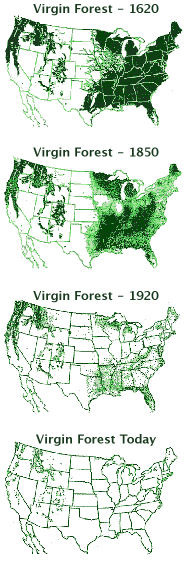
Deserts are being created annually by human activities. 2.4 billion acres, an area greater in size than the continental United States, has been converted into desert by agriculture and development over the past 6,000 years. This tragedy can be reversed, and the forests can be fully restored. FR is dedicated to doing this in a way that also makes long-term economic sense.
FR began restoring forestland in 1994. Then, like every year, demand for wood products actively degraded forests in every corner of the globe. If FR restored the forest only to protect them, other forests would necessarily increase logging to meet existing demand. Creating another pretty forest preserve ignores the bigger picture. The only way that forests can grow in biomass while permanently and significantly contributing to the earth is to maintain sustainable accommodation with the needs of human society. Over time, FR plans to expand outside of California's Redwoods. There is no lack of degraded forestland anywhere in the world.
FR is guided by one simple idea: ecology and economy can thrive together. FR currently works in the Redwoods of California because they were once the greatest forest in the world: a forest of the tallest trees with greatest biomass per acre. Excluding protected land and parks, the Redwoods have slowly been reduced to approximately 20% of the original standing volume. FR can help reverse this all-too-typical historical pattern. FR has slowly acquired timber rights and now manages over 550 acres. FR intends to play a leadership role by restoring and sustainably managing thousands of acres of Redwood forests. FR's practices will transform the way industrial forestry is practiced in California's Redwoods within a few decades. Come walk where we have worked. See and feel the woods being transformed. Now, for the first time, FR is reaching out beyond its core group of investors to expand the scope of its work. FR forestry investments offer significant tax breaks in the first year along with significant asset appreciation annually. FR's forests yield a growing income stream after the initial forest restoration is completed, usually after a twenty-year period.
FR's field work is done mostly by hand with only light equipment. We focus on improving standing conifer volume, species composition, tree quality, and wildlife habitat while lowering fire risk and erosion on slopes and near streams. In less than a decade, changes are dramatic and easily comparable to unmanaged or "business-as-usual" land in the vicinity. For example, recent research at the Andrews Experimental Forest near Eugene, Oregon shows that most logged forests require two to three hundred years to create conditions to support endangered populations of "mature-forest dependent" animals. Some of these scientists now believe that by working to enhance the forest's diversity, habitat requirements that support "mature-forest dependent" species can be created within decades instead of centuries. Only time will tell exactly how long it will take. With each passing year, more is understood about the needs of forest plants, animals, and the soil.
FR's lands have conservation easements with carefully written forest management plans that are attached to the property's deed to permanently protect the land. In the short-term, this maximizes ecological protection and tax savings for the forestland investor(s). In the long-term, this maximizes economic productivity because FR's practices enable logged forests to rapidly return to conditions characteristic of mature and "old-growth" ecosystems, while simultaneously following easement specifications that allow for limited, sustainable, and eventually highly profitable timber harvesting.
We hope to restore as much of our Redwood watersheds as quickly as nature, finances and our backs allow. As the restoration develops, it will be a living example and inspiration for others. Visitors are welcome.

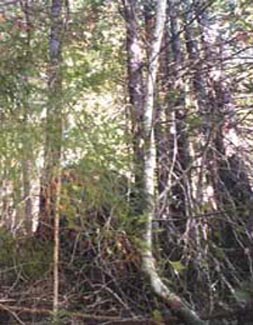
Thirty years after heavy logging, the "cathedral ceiling" has become an impenetrable maze of branches from the canopy to the ground. You must push branches to walk or see beyond a few feet. Thinning and limbing structurally transforms the young forest, lowers fire danger, and begins to recreate the expansive understory of the ancient forests.
Does your forestland look like the "before" photo? If so, we can help. We will be glad to schedule a site visit to your property to help evaluate the situation. A detailed list of recommendations and procedures will be provided for you to review and implement. Or we can send in our fully trained staff to accomplish the appropriate clearing. Please call or contact us to discuss your particular needs.
Please note: We mill logs for people local to Sonoma and Mendocino counties for a percentage of the wood. No money changes hands. We will do this as long as the log(s) are from reclaimed work or from a tree fallen by storms. We do not do milling trades with logging operations or other harvesting operations.
Nobody made a greater mistake than he who did nothing because he could only do a little. - Edmund Burke
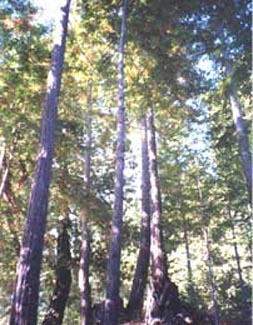
There is a way to harvest trees for human use that can both increase the future productivity of depleted forests and allow them to regenerate and restore themselves. We must do two things. We must harvest, for a considerable length of time, less than is growing, and we must adjust the harvest rate to maintain high inventories of trees in the forests once they are restored. For the few remaining forests not yet damaged by unwise human interference, we need only maintain high inventory, which can be accomplished by harvesting a certain percentage of inventory, as Dr. Hans Burkhardt explains it in her article: "The Economic Aspect Of EcoForestry"
Raul Hernandez, Founder and CEO, hosted a live Q&A Jan. 2019 for folks interested in becoming a conservation-investor in our restoration forestry project.
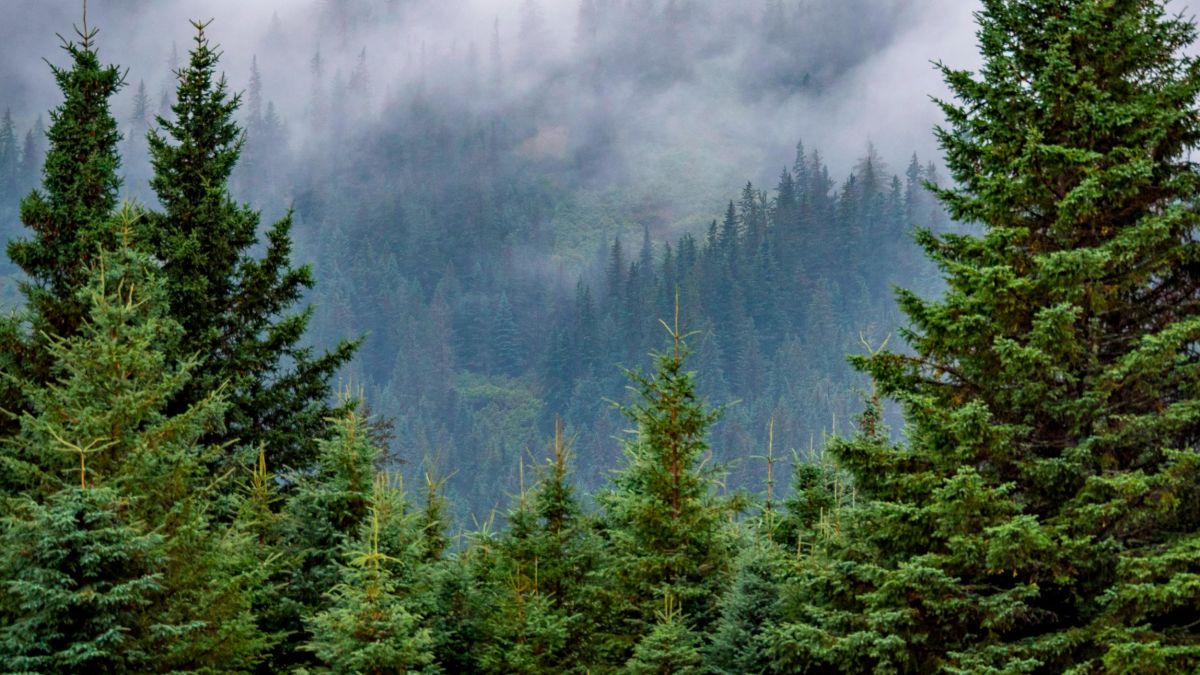
Forests can be restored back to Old-Growth Again. We are doing it. Old-Growth Again Restoration Forestry (OGA) is the parent company of Forever Redwood. OGA is a "hands-on" organization restoring logged forestlands back to their ancient form. Restoration forestry works with the forest to grow large and old trees over time to maintain them in perpetuity.
Forests of large trees sequester enormous quantities of carbon from the atmosphere. Consistently increasing permanent carbon sequestration adds to climactic stability and global cooling. Equally important, forest management that works with the forest to bring back ancient trees in perpetuity helps reverse biological diversity declines by recreating old-growth habitat conditions. It takes time, money and a lot of physical work, but dramatic changes occur in a relatively short time. Come visit and see what we've accomplished since 1995.
Your Forever Redwood furniture purchase funds the restoration work entirely. Thank you for your support. We hope to restore nearby forests in the coming years. There is no lack of overly harvested forestland anywhere in the world.
We are often asked: How can you save forestlands if you cut trees to make furniture? For a complete answer, please download our Forest Restoration Manual (13.5 MB). The 85-page PDF details OGA's pioneering Restoration Forestry practices. A shorter answer is below:
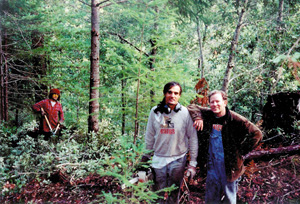
OGA works with the forest to restore the severe changes caused by industrial logging. For example, the softwood timber volume of our Annapolis, CA forestlands (Redwood, Douglas-fir and Sugar Pine) was reduced from an average of 50,000 bf/ac (board feet per acre) in the 1950's to below 5,000 bf/ac by 1972. At the same time, many of the competing hardwoods were left standing (Tan Oak, Madrone, Live Oak, Bay Laurel, Manzanita and others). This resulted in reducing the standing softwood timber volume of the forest to below 10% of its standing capacity while the hardwood volume jumped from approximately 15% of total volume to over 50%. The forest became an overcrowded fire hazard of suppressed and poor quality trees that was nothing like the old forest it replaced.
OGA begins by thinning the hardwoods at the same rate they are growing (about 35% per decade) so they will not increase in actual volume over time. Many of the thinned trees are either poor quality or suppressed trees that will not survive and contribute to the increasingly high fire hazards. Each thinning is a labor intensive effort (no chemicals are ever used) that lowers the fire hazard while improving overall tree quality and spacing. Practicing these steps consistently over time allow the large softwood trees to slowly regain dominance of the forest again. OGA also thins the softwoods (Redwood, Douglas-fir and Sugar Pine) at 10% per decade while the forest grows approximately 35% per decade (at this point in its maturation). From this very conservative harvesting, we make our "Mature Redwood" and "Redwood" grades of lumber furniture. Careful soil building and tree planting practices are an integral part of restoration. Each winter, we plant several thousand 3 to 4 ft. tall seedlings with hearty, well-established 5 gallon root balls. The trees are grown in our nursery and planted in-between trees in thinned areas where the canopy is mostly closed.
OGA takes extreme measures to care for and rebuild the forest soil. We do not burn slash, we never run equipment off skid trails, we do not use chemicals of any kind, and we do not use fertilizers. All leaves and small branches are cut to below 1 ft. of height, and are spread on the forest floor to add both nutrients and structure to the soil. Most of the fallen, woody debris that was inherited on our lands is retained, and each 10-year thinning adds more downed logs to build moisture and habitat. We thin "from below" and remove many lower limbs of retained trees to lower the risk of catastrophic fire. We retain most "wildlife" trees (snags, dead top trees, etc.) and set aside 5 trees (of all species) per acre to never be cut. Combining these steps and many more helps the forest develop large mature and old-growth trees over time.
Restoration forestry is a more conservative forestry practice than "Sustainable forestry." Forests under restoration forestry management sequester two and half to three times more carbon in perpetuity than forests managed under the strictest "sustainable forestry" standards in practice as of 2011. OGA's mission is to demonstrate how restoration forestry allows both the forest and the human community around it to flourish symbiotically. It is a long-term example of how a forest can contribute to the human society surrounding it while flourishing in all respects simultaneously. A forest managed this way for just a few decades is a striking contrast to an industrial or even a "sustainably" managed forest. Thank you for helping spread Restoration forestry knowledge and its use. Our forest restoration manual includes additional reading references and the legal framework (conservation easements) to restore any forest and keep the restoration in place through subsequent ownerships.
If you own forestland that needs restoration and re-vitalization we can help. If you own Redwood forestlands in Sonoma, Mendocino or Humboldt counties and are interesting in having your lands managed under a Restoration Forestry regimen long-term, please email us at [email protected] or download our Forest Restoration Manual.
Would you like to learn more about Restoration Forestry?
Our Restoration Forestry manual includes references to excellent books on good forestry practices.
We also invite you to read "The Economic Aspect of Ecoforestry" by the late Dr. Hans Burkhardt, one of the guiding lights of the Restoration Forestry movement and a personal mentor to our team.
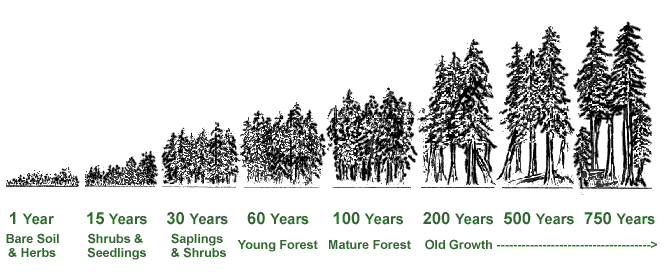
Tree growth can be divided into three phases:
- The first phase is characterized by a very high, rapidly declining percentage growth and negligible volume production. For example, a pencil-thin tree may double in volume in one year, but the volume added amounts to very little. (Growth rates of 100% declining to about 7%.)
- The second phase is characterized by a lower, gradually declining percentage growth, a high volume growth, and ends when average annual volume growth culminates. (Growth rates declining from about 7% to 2%.)
- The third phase is characterized by a continual declining percentage growth and a slowly decreasing high volume growth. (Growth rates below 2%.)
All conifers continue to grow substantially in the third phase, some more and for longer than others. Redwoods and cedars increase volume considerably for many hundreds of years after reaching a culmination of average annual volume growth (CMAI, culmination of mean annual increment.) Also —and most importantly— all tree species show a significant increase in the quality of their wood during the slower, post CMAI phase of growth. This period —when the forest becomes mature— is also the most important for the creation of high inventory and forest sustainability. For the perpetuation of California's redwood forests, this third phase is especially important since it is needed to allow for natural regeneration and thus continued genetic adaptation to changing environmental conditions. Therefore, if native forests are to be used for perpetual timber production, it is imperative, for reasons that include maximum long-term revenue flow for both the owner and the local community, not to eliminate this lucrative component of all native forests.
Current North American forestry practices, with few exceptions, does indeed eliminate this third, most important phase of tree growth. And worse, not only are these older trees being systematically eradicated, but even much younger trees —trees in their most active, pre-CMAI period of growth— are routinely harvested under the current practices of industrial forestry. This level of over-cutting has finally made the ongoing destruction of our native forests clearly apparent to everyone who is concerned with not only other species' survival, but also our own.
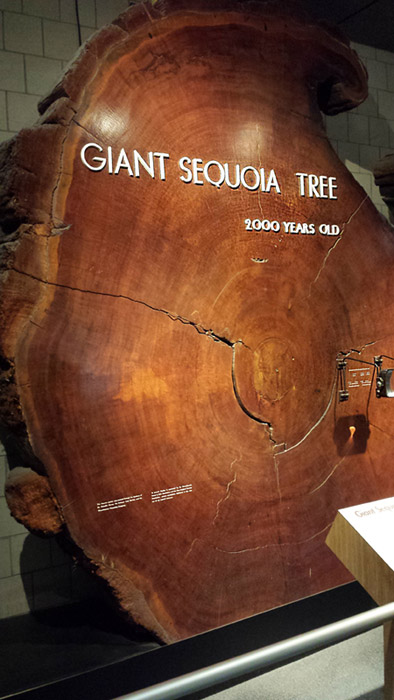
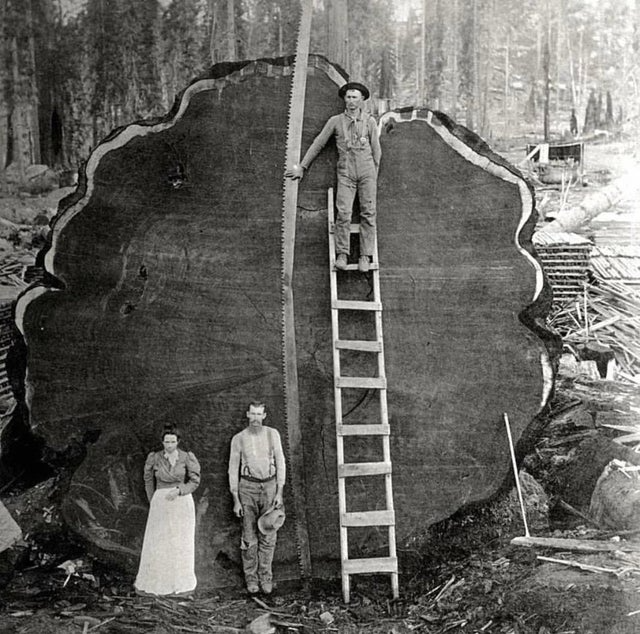
2000 yeard old giant sequoia tree at Museum of Science Driveway of Boston.